
A clear guide to choosing quality vinyl: differences between editions, pressing countries, record labels and...
- There are no more items in your cart
- Shipping Free
- Total €0.00
Latest posts
-
 The Sound Behind the Record: How to Choose a Quality Vinyl PressingRead more
 -
 When Music Slows Down: Ritual, Presence, and the Physical FormatRead more
A thoughtful essay on how physical music formats - vinyl, CDs, or tapes - bring intention, ritual, and presence back...
-
 The Jazz that opens the year - 5 collector albums for the middle of winterRead more
5 jazz vinyl albums to start the year right – a warm, elegant winter selection available now at Retrospace.
-
 From carols to winter music - from the modern era to the contemporary ageRead more
A brief look at how Christmas carols and holiday music have evolved from the 1920s to today, balancing tradition,...
-
 The Victorian Era: The Golden Age of Christmas CarolsRead more
The second volume of the History of Christmas Carols explores the Victorian Era, a defining period in which carols...
-
 The History of Christmas Music: from Antiquity to the Middle AgesRead more
An engaging overview of the origins of Christmas carols, from their roots in Antiquity to their suppression and...
-
 From the Creator Spirit to Redbone: The History of Native American MusicRead more
Explore the captivating journey of Native American music—born from spiritual tradition, shaped by community, and...
-
 Launching the Retro BlogRead more
Welcome to the Retro Blog, a space where we share our common passion for music, analog sound, vintage audio...
Blog categories
Search in blog
The Sound Behind the Record: How to Choose a Quality Vinyl Pressing
If listening to music on vinyl is already a passion or you’d like it to become one, a natural question tends to come up pretty quickly: are there real quality differences between albums, editions, countries, or record labels? Can you rely on certain details when choosing a record, so the listening experience is genuinely better? The short answer is yes. Beyond the condition of the vinyl, which we’ll cover in a separate article, it’s important to know that the very same album can sound different from one edition to another. The edition, the label, the country of pressing, and the period in which the record was made can all significantly shape how we perceive the music.
A record’s quality isn’t reflected only in its sound, but also in how it behaves over time. Good pressings usually have very low surface noise, better stability on the platter, put less strain on the stylus, and age more gracefully. It’s no surprise that many editions considered reference points are, quite often, first pressings, and end up being treated as collectible objects. In early runs, the stampers are new and less worn, and the transfer from the master is handled with closer control, before volume pressures start to take over. That can lead to subtle, yet real differences in clarity, surface noise, and stability. This doesn’t always mean that a first edition is, by definition, an expensive record; rather, it’s that early pressings often have a natural technical advantage.
Heavier weight can matter, but it doesn’t guarantee superior sound. Older editions can be extraordinary, but they can also come with imperfections. Out of nostalgia or sometimes a form of snobbery, these ideas spread easily, even though reality is far more nuanced. Things are rarely black and white. Choosing good records takes information, patience, and inevitably a measure of trying, adjusting, and learning as you go. In the lines below, we’ll briefly walk through the essential stages of the production chain, to better understand what shapes a record before it ever reaches your turntable.
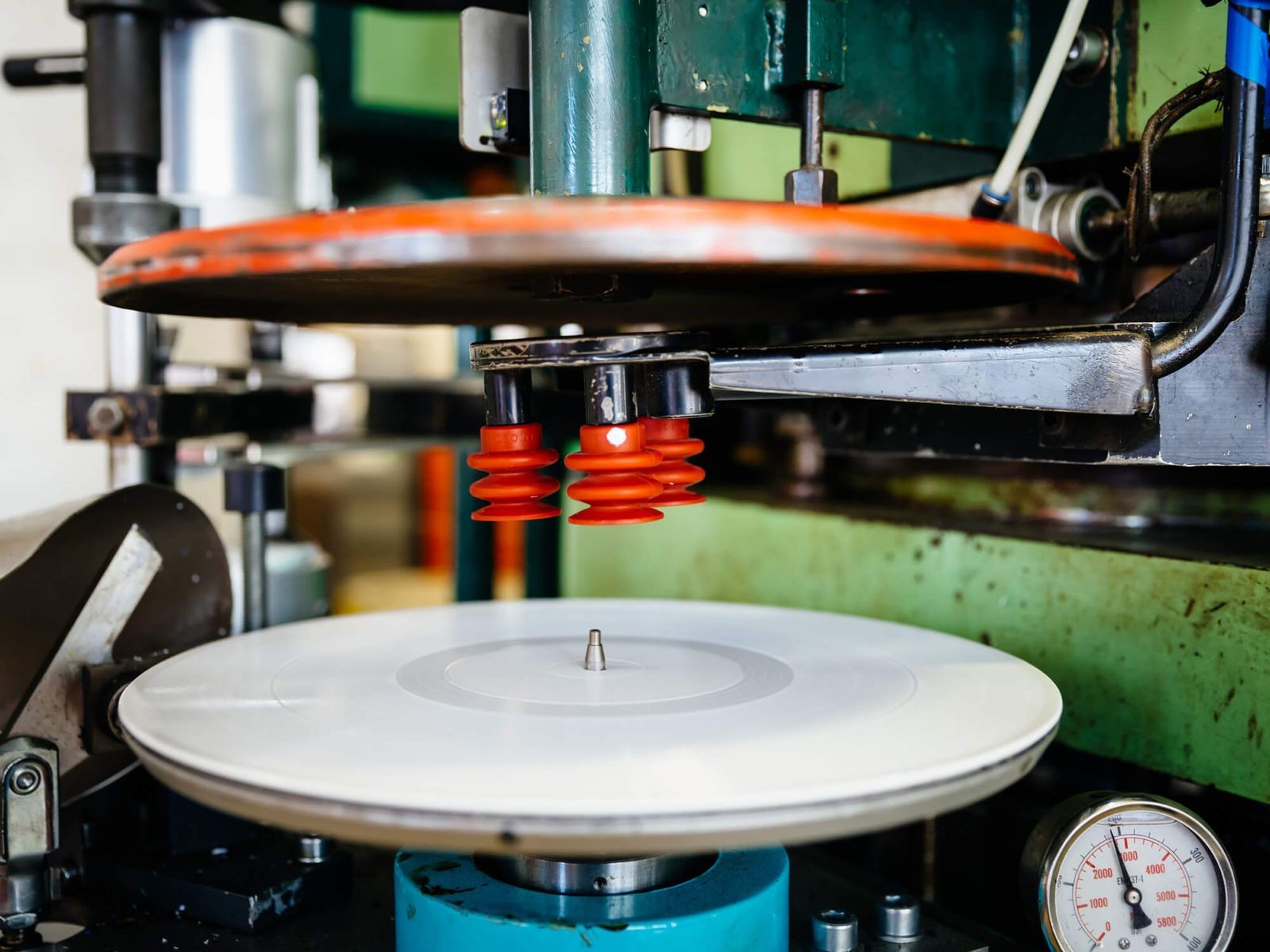
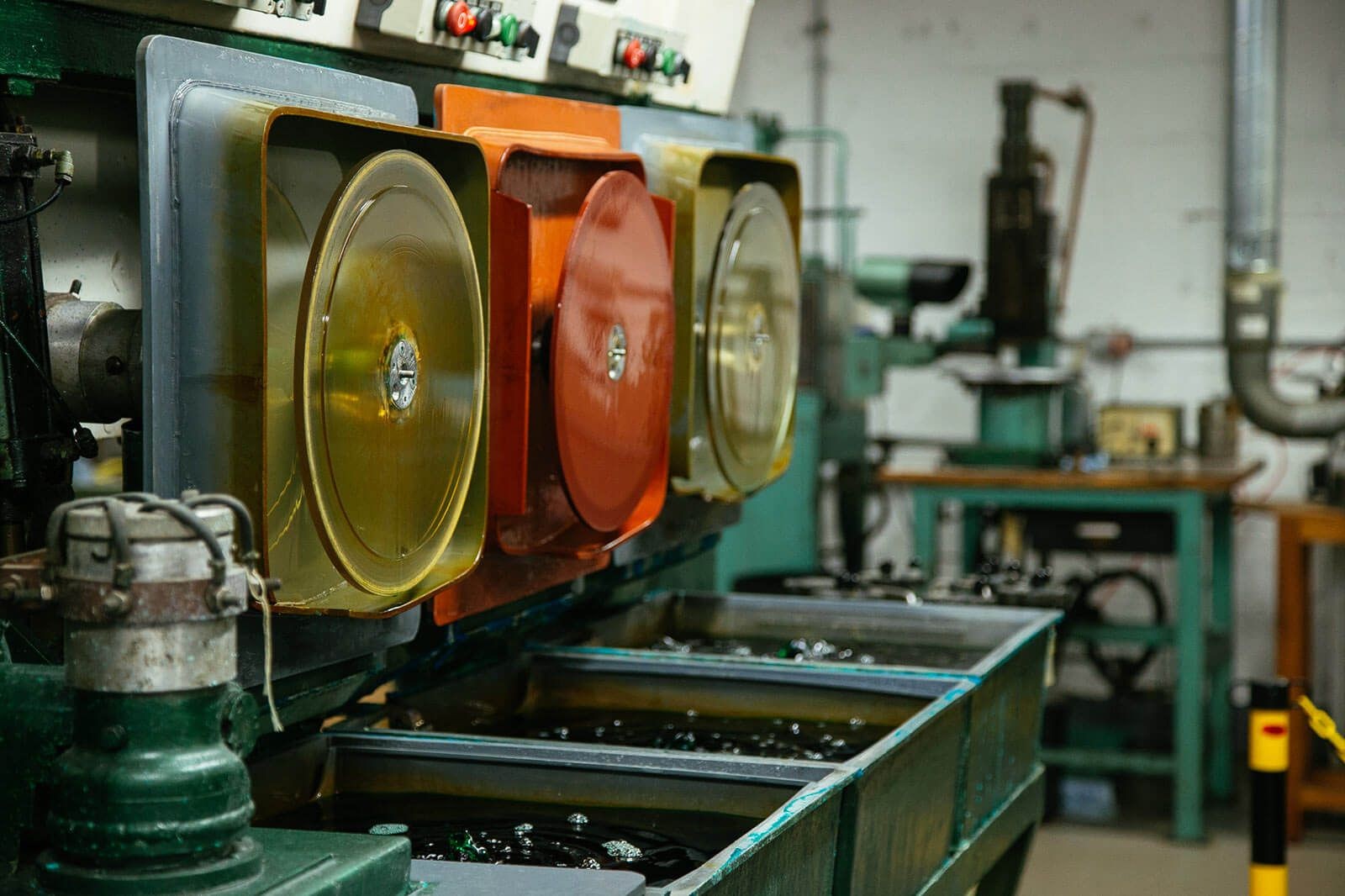
A pressing plant is the place where music, already mastered, literally becomes a physical object: a vinyl record. This is where materials, temperature, pressure, equipment, and mechanical tolerances come into play. The plant works with stampers derived from the master disc, presses molten vinyl between them, then cools it, trims it, inspects it, and packages it. Even with an excellent master, a poor pressing can compromise the final result. Vinyl is, by nature, an imperfect material, and any impurity can translate into audible issues. A flawed pressing can introduce surface noise, distortion, or centering problems. Some plants use virgin vinyl, which tends to be quieter; others recycle material, sometimes with noisier results. Some enforce strict quality control; others prioritize volume. Pressing plants don’t create the sound, but they do determine how faithfully it reaches the listener.
Just as important is the role of the record label. It isn’t simply a logo printed on the sleeve, but the entity that coordinates the entire path from artist to finished product. In vinyl’s golden age, labels decided almost everything that affected sound. Mastering engineers were largely anchored in the format’s demands and worked with vinyl constantly, often specialized within well-defined genres, which refined, over time, a very specific intuition: how to achieve dynamics and balance without compromise. Today, most mastering is oriented toward digital, and specialists dedicated exclusively to analog are fewer; many work across very different styles, with multiple delivery priorities. That shift in context helps explain, in part, why many older pressings retain a particular coherence and naturalness.
Labels therefore selected the pressing plant, allocated budgets, and defined the level of quality control. That’s why two records from the same label can sound very different. Over the decades, the same labels went through leadership changes, different production policies, smaller or larger runs. Some worked with certain plants in the ’70s and different ones in the ’80s, building their reputation mainly in a specific period. A label is, in essence, a curator of sound, not just a publisher of music, and each one carries its own philosophy. Some treated vinyl as a reference medium, not merely a commercial product (e.g. ECM).
Choosing a pressing facility was not random. Labels worked with different plants depending on country, costs, reputation, and volume. The biggest ones often used multiple plants for different markets (the US, Europe, Japan) and for distinct production runs. Not by chance, many consider the 1970s the peak of analog quality, while the 1980s mark a transition period in which commercial pressure led to greater variability. In that era, differences between countries became more visible. Japan set extremely strict pressing standards, followed by the US and the UK, where consistency and dynamics were priorities. Canada and Australia delivered solid results, while Germany and the Netherlands stood out through precision and industrial control. There is no single “ideal” plant in absolute terms, only geographic and historical contexts in which certain processes worked exceptionally well.
From here, we can talk about a few important labels that have historically been associated with high-quality pressings, and that can be useful reference points when you’re looking for well-made records.
ECM Records – Germany
Reference period: 1970s–1990s
From the very beginning, ECM had a clear vision of sound and of how music should reach the listener. Pressings were made primarily in Germany, at plants with a strong reputation, such as Pallas, as well as other factories tied to the PolyGram infrastructure. Strict control over mastering, careful pressing, and a coherent sonic aesthetic became part of the label’s identity. ECM records from this period are valued for very low surface noise, clear instrument separation, and an airy soundstage that emphasizes space and breath. Especially in jazz and contemporary music, ECM Germany remains a consistently reliable benchmark and one of the safest choices when you want a well-made record.
Blue Note Records (Liberty / United Artists) – US
Reference period: 1950s–1970s (with extensions into the ’80s)
In the classic era, Blue Note was pressed almost exclusively in the United States, using local plants in New Jersey and other regional factories that also served other major labels. After leadership changes, Liberty, and later United Artists, some pressings were made at larger industrial plants, including those associated with RCA. Blue Note’s quality is legendary primarily because of its mastering and excellent analog sources, though pressings from the ’60s–’70s can vary in surface noise. Even so, these records remain deeply prized for their energy, dynamics, and sense of presence, considered by many among the most “alive” and expressive jazz pressings ever made.
Verve Records – US
Reference period: 1960s–1970s
Verve worked with several American pressing plants, initially within the MGM orbit, and later under PolyGram. In the ’60s and ’70s, most records were pressed in the US, using good-quality vinyl, though not always perfectly quiet. Verve’s strength was consistently the artistic material and how it was mastered, rather than absolute pressing consistency. Sonically, Verve records are known for warm tonality, natural timbre, and a very musical presentation, especially in vocal and orchestral jazz. These are records that lean into emotion and flow more than technical perfection.
Deutsche Grammophon – Germany
Reference period: 1970s–1990s
Deutsche Grammophon relied almost exclusively on top-tier German pressing plants, integrated into PolyGram’s structure and operated under very high industrial standards. These pressings are recognized for mechanical precision, stability, and an extremely clear rendering of mids and highs. Some editions can feel more analytical or emotionally restrained, but the technical quality is consistent and predictable. For classical music on vinyl, DG Germany remains a solid reference—especially for listeners who value detail, clarity, and a disciplined presentation.
CBS/Sony – Japan
Reference period: 1970s–1980s
CBS/Sony pressings were made almost exclusively in Japan, in-house or in collaboration with plants such as JVC. In that period, the Japanese industry took pressing to a rarely matched level of refinement: extremely pure virgin vinyl, rigorous quality control, and very tight mechanical tolerances. The result is records that are exceptionally quiet and precise. Still, that precision can sometimes come with a more pronounced top end, one that may feel tighter or more rigid, depending on the genre. Jazz and fusion can sound spectacular, while progressive rock or metal may feel less energetic compared to US or UK pressings. From a technical, audiophile standpoint, Japan remains a benchmark; but in terms of collectible value and price, first pressings from the artist’s country of origin are often more sought-after.
Island / Harvest / EMI – UK
Reference period: 1960s–1970s
The UK was one of the great forces of the analog era. Labels such as Island, Harvest, or EMI worked with exceptionally well-calibrated local pressing plants, and early UK pressings are prized for the balance between impact, naturalness, and coherence. Especially for British bands, early UK editions are often considered reference versions, both sonically and as collectibles. Dynamic, direct, and free of unnecessary tricks, these pressings put the music front and center, without needless compromise.
Warner Bros – US
Reference period: 1970s–1980s
Warner Bros collaborated with several important American pressing plants, including facilities associated with Columbia and RCA. In the ’70s, many Warner pressings are regarded as very successful, with relatively quiet vinyl and balanced mastering. In the following decade, as runs grew and commercial pressure intensified, quality became more variable. Sonically, Warner Bros US from its best period delivers a solid sound with convincing dynamics, consistent bass, and a coherent presentation, especially in classic rock and pop. It’s a label that can offer very pleasant surprises when chosen with care.
Philips / Polydor (PolyGram) – Europe (NL, DE)
Reference period: 1970s–1980s
As part of the PolyGram group, Philips and Polydor benefited from some of the best-organized European pressing plants, particularly in the Netherlands and Germany, including facilities such as Phonodisc. These pressings are known for tonal balance, consistency, and low surface noise, without exaggeration or sonic showmanship. They may not feel spectacular on first listen, but they prove enjoyable and reliable over the long run. For those who want a mature, correct, easy-to-live-with sound, these European labels remain very safe choices.
Atlantic Records – US
Reference period: 1960s–1970s
Atlantic worked with several American plants, especially on the US East Coast. In the 1970s, many pressings are appreciated for an energetic sound, deep bass, and strong presence, particularly in rock, soul, and jazz fusion. After that period, as runs increased and production control loosened, quality became more inconsistent. Still, Atlantic ’70s remains a fascinating sonic zone: not perfect, but extremely alive, direct, and full of character.
In the end, choosing a good record shouldn’t turn into a race for the most expensive or the rarest copy. A healthier approach is to see price as a balance between sound, condition, and personal value. Sometimes it’s worth investing in a reference pressing; other times, a correct edition that’s been well cared for is more than enough for a satisfying listening experience.
The choice begins with information, not with budget. The record’s condition is often more important than the label or the year of pressing. A well-preserved record, even if it’s older and less popular, will almost always offer a better experience than a rare one that’s worn or damaged.
Context matters too: buying from a shop that checks records, provides accurate descriptions, and curates its selection carefully reduces the risk of a bad choice. Just as important is knowing your own preferences. Some listeners look for a warmer, more relaxed sound; others prefer detail and precision. There is no universally “correct” choice, only the one that suits you.
That’s exactly why, at Retrospace, every record is carefully checked both before entering the website and before shipping. The grading and the given price reflects the real condition of the vinyl. If errors or uncertainties come up, they’re communicated openly, and any situation is handled transparently, with respect for the customer’s listening experience.
In the end, the best guide remains listening. If a record brings you pleasure, makes you come back to it, and invites you to hear the music through to the end, then it was a good choice, regardless of reputation or price. Vinyl isn’t a competition, but a way of meeting music. The more you understand the context a record comes from, the more personal your relationship with it becomes. Sometimes you’ll choose a famous pressing; other times, a modest one that fits your mood or your system. Both can be valuable experiences. A good record is, ultimately, the one that gives you calm, emotion, and the desire to keep listening. Everything else is simply detail that helps you get there a little more easily.
- by Vlad P
Posted in:
Audio exploration
Related posts
-
When Music Slows Down: Ritual, Presence, and the Physical Format
A thoughtful essay on how physical music formats - vinyl, CDs, or tapes - bring intention, ritual, and presence back...Read more
Leave a comment