
A clear guide to choosing quality vinyl: differences between editions, pressing countries, record labels and...
- There are no more items in your cart
- Shipping Free
- Total €0.00
Latest posts
-
 The Sound Behind the Record: How to Choose a Quality Vinyl PressingRead more
 -
 When Music Slows Down: Ritual, Presence, and the Physical FormatRead more
A thoughtful essay on how physical music formats - vinyl, CDs, or tapes - bring intention, ritual, and presence back...
-
 The Jazz that opens the year - 5 collector albums for the middle of winterRead more
5 jazz vinyl albums to start the year right – a warm, elegant winter selection available now at Retrospace.
-
 From carols to winter music - from the modern era to the contemporary ageRead more
A brief look at how Christmas carols and holiday music have evolved from the 1920s to today, balancing tradition,...
-
 The Victorian Era: The Golden Age of Christmas CarolsRead more
The second volume of the History of Christmas Carols explores the Victorian Era, a defining period in which carols...
-
 The History of Christmas Music: from Antiquity to the Middle AgesRead more
An engaging overview of the origins of Christmas carols, from their roots in Antiquity to their suppression and...
-
 From the Creator Spirit to Redbone: The History of Native American MusicRead more
Explore the captivating journey of Native American music—born from spiritual tradition, shaped by community, and...
-
 Launching the Retro BlogRead more
Welcome to the Retro Blog, a space where we share our common passion for music, analog sound, vintage audio...
Blog categories
Search in blog
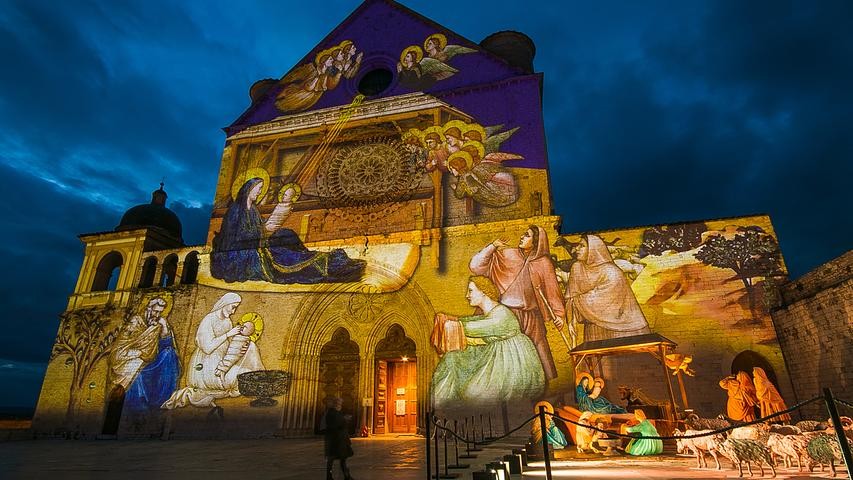
The History of Christmas Music: from Antiquity to the Middle Ages
“The History of Christmas Music” will explore carols from Antiquity through the Middle Ages, while the following articles will take us from the Renaissance to the Industrial Revolution and, ultimately, to Frank Sinatra and the other classics of contemporary Christmas music.
Christmas carols can trace their roots back to the early centuries AD, when early Christians transformed pagan traditions celebrating the winter solstice into the celebration of Christmas and began composing religious hymns dedicated to the Nativity. The earliest legends suggesting that the “Angel’s Hymn” was sung during Christmas services in Rome date as far back as the 2nd century, while the first clear attestations of liturgical Christmas chants appear in the 4th–5th centuries.
A large proportion of medieval carols still sung today are written in Middle English. Following the Norman Conquest of England, many words were borrowed from Norman French and became widespread in religious melodies, especially in carols. Words such as “homage,” “religion,” “chaplain,” “miracle,” “charity,” and “saint” entered the language during this period. These carols have largely preserved their original form because Middle English is relatively close to modern English. To today’s reader, it can sometimes resemble “misspelled” English, with forms such as wynter and somer (winter and summer).
Many medieval Christmas songs originally existed only as melodies, with lyrics added later; numerous 15th-century compositions received their texts much later in time. Many of the songs later translated into various languages were popularized in 1582, with the publication of the Latin carol collection “Piae Cantiones.” In 1647, Oliver Cromwell and the Puritan movement came to power in England and banned the celebration of Christmas, deeming it a pagan festival, and carols were strictly forbidden.
After the Restoration of the monarchy in 1660, carols were once again permitted, but their true revival and widespread popularity came only in the Victorian era, when the custom of singing carols after Christmas dinner also took shape. The publication of “Christmas Carols, New and Old” by Henry Ramsden Bramley and Sir John Stainer played a major role in popularizing Christmas carols.
— by Lester Moore
Proposed selection:
Ștefan Hrușcă - Colinde
https://retrospace.ro/en/folk-country-latin-world/35739-tefan-hruca-colinde.html
Choir of the Romanian Patriarchate Conductor : Rev. Iulian Cârstoiu - Romanian Christmas Carols / Colinde Românești De Crăciun
Mario Lanza – Christmas Hymns & Carols
Sources:
https://www.plymouth.ac.uk/discover/the-history-of-christmas-carols
https://www.ucl.ac.uk/social-historical-sciences/news/2020/dec/evolution-medieval-christmas-carols
Posted in:
Music history
Related posts
-
From the Creator Spirit to Redbone: The History of Native American Music
Explore the captivating journey of Native American music—born from spiritual tradition, shaped by community, and...Read more
-
The Victorian Era: The Golden Age of Christmas Carols
The second volume of the History of Christmas Carols explores the Victorian Era, a defining period in which carols...Read more
-
From carols to winter music - from the modern era to the contemporary age
A brief look at how Christmas carols and holiday music have evolved from the 1920s to today, balancing tradition,...Read more
Leave a comment